

Common Wasps in Florida: Nest Removal From Solar Lights and Battery Boxes
You lift the cap off a solar path light to swap a tired NiMH cell, and something buzzes. Tucked against the underside of the panel is a gray paper comb about the size of a quarter, with two wasps standing guard.
In Florida this happens all the time, which makes wasp nest removal a routine chore for anyone who maintains outdoor solar equipment. The sheltered, sun-warmed spots that keep outdoor electronics dry are exactly where wasps like to build.
What you do next depends on the species. A paper wasp comb under a solar light lid can usually be knocked down at dusk with a long-reach spray. A nest inside a battery enclosure, or a yellowjacket colony in the ground, calls for a professional, and this guide to common wasps in Florida nest removal shows how to tell those species apart before you reach for anything.
Better still, make your fixtures and equipment boxes unattractive before a queen comes looking.
Why Wasps Like Solar Lights, Eaves, And Equipment Enclosures
A wasp wants three things in a nest site: shade, cover from rain and a firm surface to hang from. A solar light housing offers all three, plus a little warmth from the panel above. Battery boxes for backup power, pool pump covers, generator enclosures and the eaves over a wall-mounted inverter do the same.
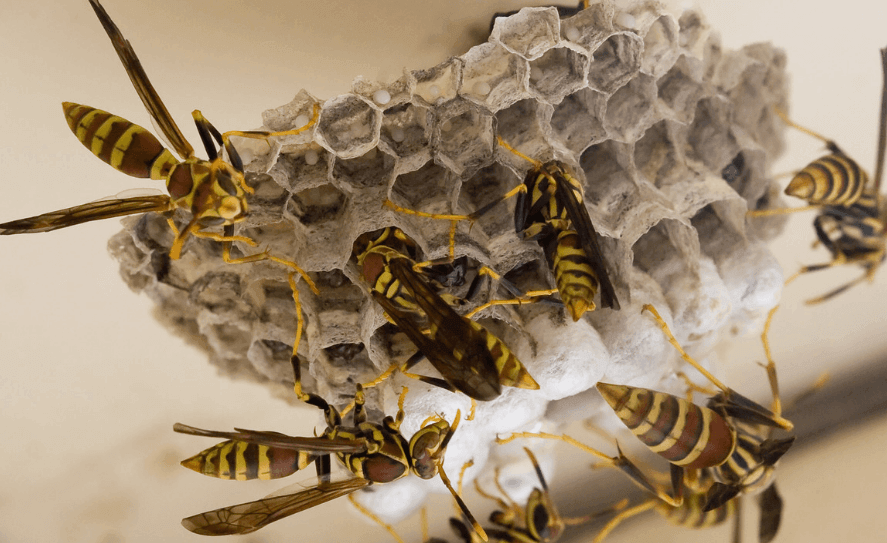
According to Entnemdept, paper wasps nest on human structures such as fences, porches, window frames, attic rafters and eaves, and fertilized queens start new nests each spring.
For prevention, that second fact is the useful one. Every colony begins as a single queen working alone, so spring is when it is easiest to stop.
| Paper wasp detail | What the research shows |
| Body length | About 1.7 cm to 3.5 cm long |
| Nest shape | A single, roughly round, flat comb of paper cells hanging from a narrow stalk |
| Common nesting sites on homes | Fences, porches, window frames, attic rafters and eaves |
| When nests are started | In spring, when fertilized queens pick a site and begin building |
| Florida species on record | Mischocyttarus mexicanus cubicola, a documented paper wasp |
Look for that narrow stalk. An open comb shaped like an upside-down umbrella almost certainly belongs to paper wasps, not yellowjackets, which build enclosed nests and often go underground.
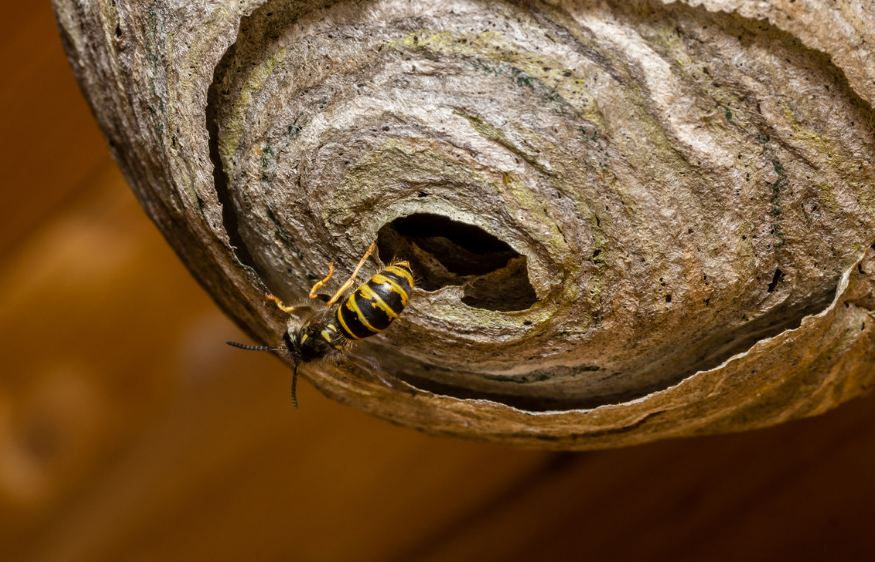
Two other Florida wasps are worth knowing by sight. Bald-faced hornets build a large, enclosed gray paper nest, usually high in a tree or under a roofline, and they defend it hard, so treat one like a yellowjacket nest and call a professional. Mud daubers are the opposite. They build small tube-shaped nests of dried mud on walls, under eaves and inside enclosures, and they rarely sting. A mud nest can usually be scraped off and the spot washed down.
Seasonal Habits That Keep Florida Wasps From Moving In
Florida’s long warm season stretches the nesting window, so one spring check won’t cover you. Treat wasps the way you treat battery maintenance: short, regular visits beat one big cleanup.
From late February through April, walk the yard once a week with a flashlight. Check under every solar light cap, inside the lip of your battery or generator cabinet and along the eave directly above any outdoor outlet. At this stage a founding nest may be only a handful of cells, easy to miss unless you are looking for it.
Knock it down with a broom handle while it is that small. A lone queen has nothing to defend yet and will usually move on rather than rebuild in the same spot.
In summer, check every two weeks instead. Fold the walk into jobs you already do, like wiping dust off solar panels or looking for corrosion on terminals. A routine tucked inside existing maintenance is one that actually happens.
Keeping solar fixtures and battery boxes sealed and easy to inspect
Aim for an enclosure a wasp can’t get into and you can see into at a glance. A few small changes handle most of the risk.
- Fit fine stainless mesh over vent openings on battery and inverter cabinets, keeping airflow intact so cells do not overheat.
- Run a bead of exterior silicone around gaps where cable glands or conduit enter an enclosure.
- Choose solar lights with a snug, gasketed top rather than an open cap with a hollow underside.
- Mount equipment boxes a few inches off the wall so the space behind them stays visible and bright.
- Rub a thin film of dish soap or car wax on the underside of eaves and light caps, which makes it harder for a queen to anchor her stalk.
Watch the ventilation tradeoff. Lithium and lead-acid systems both need moving air, and sealing a cabinet completely can push temperatures past the manufacturer’s limit. Mesh with openings around 1 mm keeps wasps out and lets the air through.
Placement matters as well. Path lights in full sun with an open frame draw fewer wasps than ones tucked under shrubs, and they charge better.
Handling a nest safely and when to call a professional
Sometimes a nest gets past you. If it is a small, open paper wasp comb on a light fixture or fence post, treat it at dusk, when the colony is home and sluggish. Use a wasp spray with a 15 to 20 foot jet, stand to the side rather than underneath and wear long sleeves. Leave it overnight and scrape off the dead comb in the morning.
Never spray into a battery enclosure, charge controller or inverter housing. The propellant is flammable, and the residue can coat terminals and circuit boards. Disconnect power first if you can do it safely. If the nest sits deep inside the box, step back.
That is where a professional earns the fee.
Call one for any nest inside live electrical equipment, any nest bigger than a softball, any enclosed paper ball hanging from a tree or soffit, and any steady stream of wasps flying in and out of a hole in the lawn. Those last two usually mean yellowjackets, which defend in numbers and attack hard. If anyone in the house has a known sting allergy, skip DIY removal altogether.
After the nest is gone, wipe the attachment point with soapy water and put that fixture on your weekly spring walk-through. Queens often come back to the same sheltered spots. Mark the first warm weekend of next February on the calendar: a flashlight and five minutes under those caps is the cheapest wasp control you will ever do. Whichever wasp built it, safe nest removal starts with knowing the species, and the cheapest nest removal of all is the one you never need.