
7 Off Grid Battery Mistakes That Cost Thousands (and How to Avoid Them)
Living off the grid offers independence from utility bills and freedom from infrastructure failures, but that independence rests entirely on your battery bank. A well-designed system delivers years of reliable power.
A poorly planned one drains your budget through premature replacements, emergency repairs, and equipment damage. Many first-time off-gridders learn these off-grid battery mistakes the expensive way, replacing batteries every two years instead of every ten, or discovering their inverter has been slowly destroying cells for months.
This article walks through the most damaging mistakes homesteaders, remote cabin owners, and off-grid builders make when selecting and managing their energy storage. You will learn which shortcuts lead to early failure, what marketing claims to ignore, and how small oversights compound into major headaches.
Whether you are planning a new installation or troubleshooting an underperforming existing system, understanding these pitfalls protects both your investment and your peace of mind.
Undersizing Capacity Because the Calculator Said So
Online battery calculators promise to tell you exactly how many amp-hours you need. You enter your appliances, add up the watts, and get a neat number. Then you buy that exact capacity and wonder why you run out of power halfway through a cloudy week. The problem is that calculators rarely account for real-world inefficiencies, temperature derating, aging capacity loss, or the fact that you cannot fully discharge most chemistries without damage.
A properly sized off grid battery bank should provide at least three to five days of autonomy at your average consumption rate, not your minimum theoretical load. This buffer protects you during extended storms, unexpected equipment failures, and the inevitable capacity fade that occurs over the first few years. Skimping on capacity to save money upfront usually means chronic deep cycling, which destroys batteries far faster than normal aging ever would.
Daily depth of discharge matters as much as total capacity. Trojan Battery recommends limiting routine discharge of its deep-cycle lead-acid batteries to 20–50% of rated capacity for optimal lifespan. That means a substantial portion of the nameplate capacity should be reserved rather than used every day.
Lithium iron phosphate batteries generally tolerate deeper discharge, although specifications vary by manufacturer and model. For example, Battle Born Batteries lists 100% usable depth of discharge for its 100 Ah LiFePO₄ battery, while Victron Energy shows that limiting discharge to 80% can provide longer cycle life than deeper cycling. Size your battery bank according to its usable capacity and the manufacturer’s specifications, not just the number on the label.
Ignoring Seasonal Variation in Load and Generation
Summer calculations look great when your solar panels run at full output for fourteen hours and your heating needs vanish. Winter tells a different story. Shorter days, lower sun angles, snow coverage, and heating loads can triple your daily consumption while cutting solar generation in half.
If you size your bank for summer conditions, you will spend every winter either running a generator constantly or replacing batteries that spent months in a partially charged state.
Mixing Battery Types or Ages in the Same Bank
It seems economical to add new batteries to an existing bank rather than replacing everything at once. In practice, this creates an electrical mismatch that ruins both the old and new units. Older batteries have higher internal resistance, so they charge slower and discharge faster than fresh ones.
The new batteries end up overworked while the old ones never fully charge. Within months, the entire bank performs worse than the weakest cell, and you have wasted money on batteries that never reached their potential.
The same problem occurs when mixing chemistries. Connecting lithium batteries in parallel with lead-acid, or even mixing different lithium brands with incompatible charge profiles, creates imbalances that no battery management system can fully correct.
Always replace an entire bank at once with identical units from the same production batch whenever possible. Trying to stretch the life of one battery typically shortens the life of all of them.
Voltage mismatches are just as damaging as mismatched ages. Wiring two 12-volt batteries in series gives you 24 volts, which can damage a 12-volt inverter or charge controller, while wiring them in parallel keeps the bank at 12 volts and doubles the amp-hours.
Before you connect anything, confirm that your bank voltage matches your inverter and charge controller, and work out the series and parallel layout on paper first. A 24-volt or 48-volt system may cost more upfront for the inverter, but it carries less current through the same cable.
Choosing the Wrong Chemistry for Your Climate
Lithium batteries dominate off-grid forums for good reasons: lighter weight, deeper safe discharge, longer cycle life. But standard lithium iron phosphate cells cannot accept a charge below freezing without permanent damage.
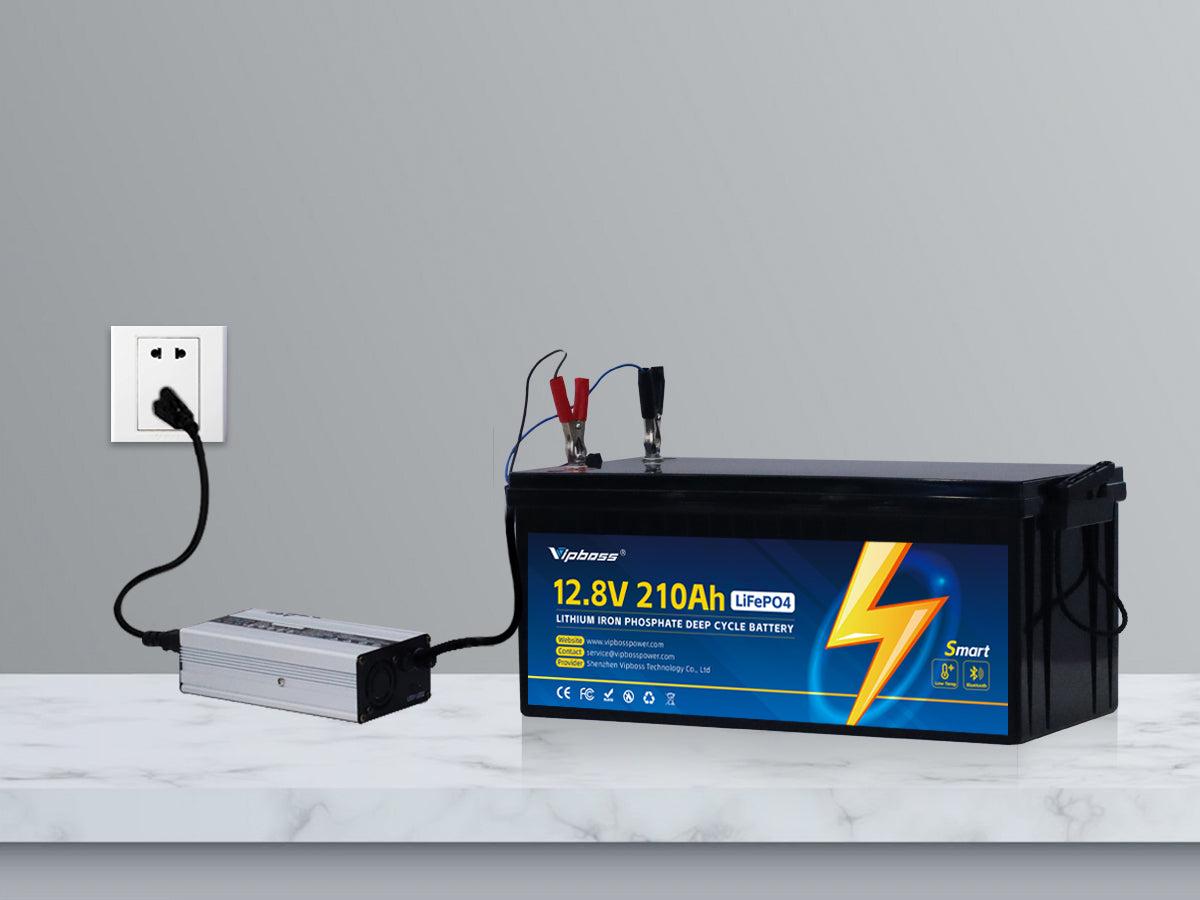
If you install them in an unheated battery shed in Montana without low-temperature protection, the first hard freeze can brick your entire investment. Some manufacturers like Vipboss build in heating and temperature cutoffs, but many budget brands skip this feature to hit lower price points.
Lead-acid batteries tolerate cold charging but lose massive capacity as temperatures drop. A bank rated for four hundred amp-hours at room temperature might deliver barely two hundred and fifty in a freezing garage. AGM variants handle temperature swings better than flooded cells, but they still suffer. The safest approach is to insulate and if necessary heat your battery enclosure, regardless of chemistry. An insulated, climate-controlled space extends battery life far more than spending extra on exotic chemistries.
Neglecting Proper Charging Equipment and Settings
Buying quality batteries then connecting them to an ancient charge controller with incorrect voltage settings is like buying premium fuel for a car with a clogged fuel filter. Lead-acid batteries need bulk, absorption, and float stages at specific voltages.
Lithium batteries require even tighter voltage control and current limits. A controller programmed for flooded batteries will systematically overcharge lithium cells, triggering protection circuits and shortening lifespan.
Equally damaging is undersized charging capacity. If your solar array can only replace half of your daily consumption on a good day, your batteries spend most of their life partially charged. This causes sulfation in lead-acid types and imbalance in lithium banks. Neither is fixable without expensive equalization or replacement. Your charging system should be able to fully recharge your bank on an average solar day, not just on the best day of summer.
Skipping Critical Safety Components to Save Money
Battery banks store enormous energy. A modest off-grid system holds enough power to instantly weld metal or start fires if a short circuit occurs. Yet many DIY installations skip fuses, circuit breakers, or proper disconnects to save a few hundred dollars. The first time a cable chafes through its insulation or a terminal loosens under vibration, that decision becomes catastrophic. Fires are not theoretical; they happen regularly in improperly protected systems.
Equally important is proper ventilation. Even sealed batteries can vent gas under fault conditions, and flooded lead-acid units release hydrogen during normal charging.
A sealed, unvented battery box in living space is a disaster waiting for an ignition source. Follow the National Electrical Code requirements for your installation type, use appropriately rated overcurrent protection within eighteen inches of the battery positive terminal, and build ventilation into your enclosure. These precautions cost far less than rebuilding after a battery fire.
Failing to Monitor and Maintain Your Off Grid Battery Bank
Batteries fail gradually, not suddenly. A cell develops higher resistance, capacity fades, charge acceptance drops. Without monitoring, you notice the problem only after it has destroyed the entire bank.
A simple battery monitor that tracks voltage, current, and state of charge costs less than a single replacement battery, yet many off-gridders skip it and fly blind. By the time voltage sags noticeably under load, damage is already done.
Maintenance varies by chemistry but never disappears entirely. Flooded batteries need water checks and terminal cleaning. AGM units need periodic full charges. Lithium banks benefit from occasional balance cycles. All types need annual terminal torque checks, since connections loosen over time from thermal expansion. Ignoring these tasks does not save time; it just shifts the work to premature troubleshooting and replacement.
Avoid Off Grid Battery Mistakes and Build a System That Lasts
Off-grid battery mistakes are rarely bad luck; they are predictable and avoidable. Undersizing capacity, mixing battery types, choosing the wrong chemistry for your climate, skimping on charging infrastructure, skipping safety components, and neglecting monitoring all guarantee early failure and costly replacements. Each of these errors seems minor in isolation, but they compound quickly into systems that never meet expectations and drain budgets through constant repairs.
The path to a reliable system is straightforward: size generously for your worst-case consumption, buy the entire bank at once from a reputable source, match the chemistry to your environment and charging equipment, protect everything with proper fuses and disconnects, and monitor performance continuously. These steps cost more upfront but deliver decades of trouble-free operation. The expensive approach is the one that looks cheap at first.